What Is a Crypto AML Check and Why Does It Matter
An AML check in crypto is a wallet screening process that flags addresses connected to illicit activity. AML stands for anti-money laundering, a compliance framework used by exchanges, banks and blockchain analytics firms to detect suspicious transactions. When you perform an AML check on a crypto wallet, the service cross-references the address against known risk indicators: mixer usage, darknet market deposits, theft reports, sanctions lists, and gambling platform links. Exchanges freeze USDT and other stablecoins tied to flagged addresses, and users can face account bans. Running an AML crypto check before accepting a transfer protects you from receiving dirty crypto that could lock your funds or compromise your compliance standing.
How AML Risk Scoring Works for Crypto Wallets
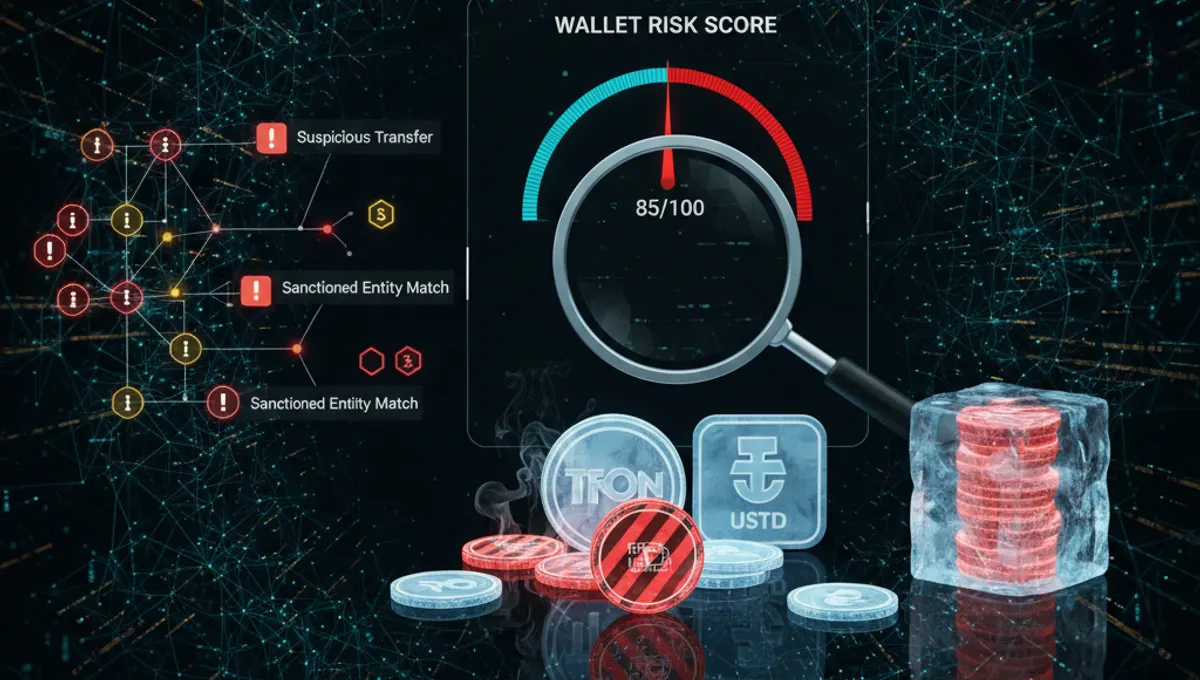
AML risk scores assign a numerical rating to a wallet based on transaction history and behavioral patterns. Most services use a scale from 0 (clean) to 100 (high risk), though some use low, medium, high or critical categories. A risk score reflects exposure to:
- mixer services that obscure transaction trails,
- darknet marketplace deposits,
- stolen funds flagged in theft reports,
- sanctioned entity wallets,
- gambling and high-risk exchange activity. Addresses with direct links to known theft or sanctions typically score above 70. Moderate risk (40–70) may indicate mixer usage or unverified exchange deposits. Low risk (0–40) suggests standard wallet activity with minimal red flags. Understanding these bands helps you decide whether to accept a transfer. Most institutional buyers reject transfers from wallets scoring above 50.
How to Check a Crypto Wallet for AML Risk Before Transfer
To perform an AML check on a crypto wallet, follow these steps:
- Copy the wallet address (TRX, USDT TRC20, BTC, ETH or other blockchain).
- Visit a trusted AML screening service—our curated list of verified AML services on this site includes reputable providers with transparent scoring and real-time updates.
- Paste the address into the search field.
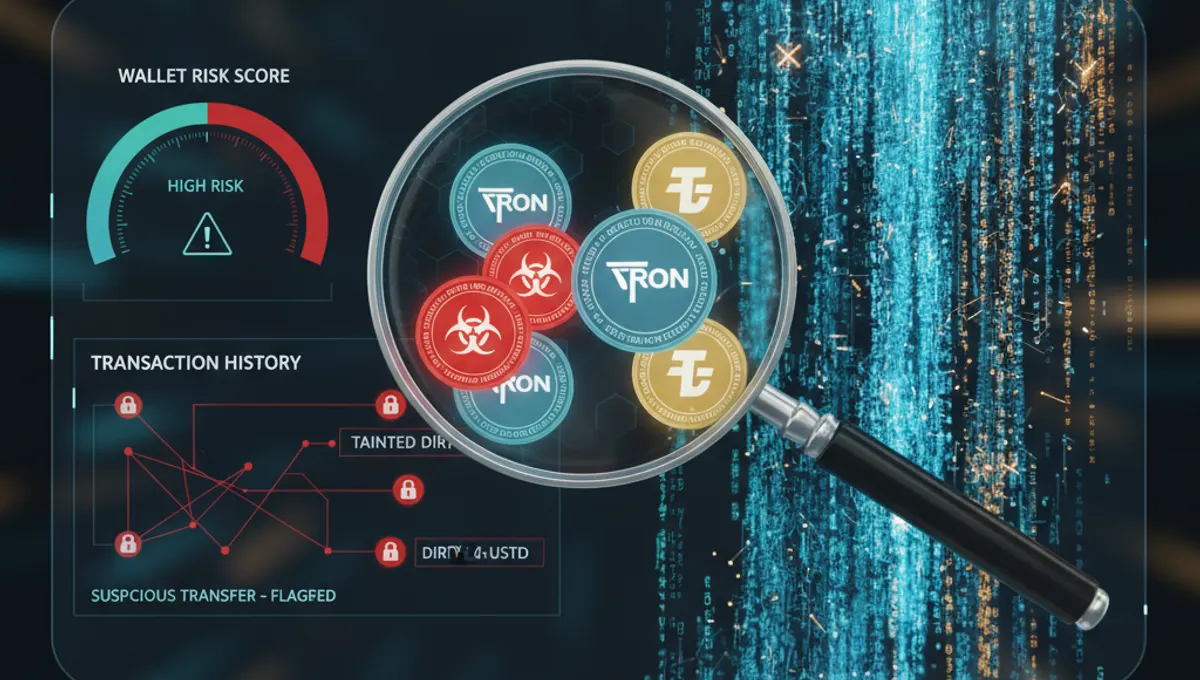
- Review the risk score and detailed report, which typically shows transaction history, linked entities, and flagged activity.
- Check for specific red flags: mixer deposits, darknet links, theft reports, sanctions matches.
- Decide whether the risk level is acceptable for your use case. Institutional transfers usually require scores below 30; personal wallets may tolerate moderate risk depending on your exchange's policy. Always verify the report date—risk profiles update as new transactions occur.
What Risk Score Levels Mean and When to Reject a Transfer
Risk score interpretation depends on your context and exchange policy. A score of 0–20 (very low) indicates a clean address with standard wallet behavior; most exchanges accept these transfers without friction. Scores of 21–50 (low to moderate) suggest some exposure to mixers or unverified sources but no direct theft or sanctions links; many retail exchanges accept these, though institutional buyers may decline. Scores of 51–75 (moderate to high) flag addresses with mixer usage, gambling deposits, or unconfirmed theft links; most exchanges require additional review or decline outright. Scores above 75 (critical) indicate direct sanctions matches, confirmed theft, or darknet marketplace activity; virtually all regulated exchanges freeze these transfers. If a wallet you're about to receive from scores above 50, contact the sender to clarify the source. If they cannot explain the activity, decline the transfer to avoid frozen coins.
Common Risk Flags: Mixers, Darknet, Theft and Sanctions
AML checks flag several categories of risky activity. Mixer exposure occurs when a wallet deposits to or withdraws from a coin mixer service designed to obscure transaction trails; this alone raises suspicion even without proof of crime. Darknet marketplace links appear when a wallet transacts with known dark web market addresses; this is a critical red flag. Stolen funds are flagged when a wallet receives coins reported as theft victims in public databases or exchange reports. Sanctions exposure means the wallet matches a government sanctions list (OFAC, EU, UN) or is linked to a sanctioned entity; this triggers automatic freezes at regulated exchanges. Gambling deposits indicate high-risk behavior but are not inherently illegal. Scam reports flag wallets linked to Ponzi schemes or rug pulls. Each flag carries different weight; theft and sanctions are deal-breakers, while mixer usage alone may be tolerable depending on your risk appetite.
What Happens When Your Crypto Gets Flagged as Dirty
If you receive tainted coins and your exchange detects them during deposit or withdrawal, several outcomes are possible. Your account may be frozen pending investigation, which can last days to weeks. The exchange may require you to prove the source of funds (proof of purchase, employment, inheritance) to unfreeze your account. In severe cases—theft or sanctions matches—the exchange may permanently ban your account and report you to compliance authorities. Your coins may be seized if they are linked to a crime. To avoid this, screen wallets before accepting transfers. If you already hold flagged coins, do not attempt to move them through regulated exchanges; instead, contact the exchange's compliance team to report the issue and request guidance. Transparency about the source often results in faster resolution than silence.
Best Practices for Screening Wallets and Avoiding Tainted Coins
Adopt these practices to minimize risk:
- Always run an AML check on any wallet sending you a large transfer before accepting it.
- Set a personal risk threshold—most retail users accept scores below 40, institutions below 20.
- Use verified AML screening services; our site lists trusted providers with transparent methodologies and regular updates.
- Ask senders to explain any moderate-risk flags; legitimate users can usually clarify mixer usage or exchange deposits.
- Avoid wallets with zero transaction history if the sender cannot verify their identity—new wallets are harder to assess.
- For USDT TRC20 and other stablecoins, be extra cautious; exchanges monitor these closely and freeze them faster than volatile assets.
- Document your AML check results; if your exchange later questions the transfer, you have proof you screened it.
- If you receive unsolicited transfers from unknown wallets, do not accept them—this is a common scam tactic.
Frequently asked questions
How do I check if a crypto wallet is clean before receiving USDT or TRX
Copy the wallet address and paste it into a trusted AML screening service. The tool will return a risk score and report showing transaction history, mixer links, theft flags, and sanctions matches. Scores below 30 are generally safe; above 50 warrant caution. Check our verified AML services list for reputable providers.
What does a high AML risk score mean for my crypto
A high risk score (above 70) indicates the wallet has direct links to theft, sanctions, or darknet activity. If you receive coins from this address, your exchange may freeze your account during investigation or permanently ban you. Reject transfers from wallets scoring above 50 unless you can verify the source.
Can I do a free AML check on a crypto address
Some AML services offer free basic checks with limited detail; others charge per lookup. Free options typically show a risk score and general flags but lack detailed transaction history. Paid services provide comprehensive reports. For critical transfers, use a verified paid service to ensure accuracy and liability.
What happens if I receive tainted crypto and deposit it to an exchange
The exchange may freeze your account, request proof of funds source, or permanently ban you if the coins are linked to theft or sanctions. You could lose access to your funds during investigation. Always screen wallets before accepting transfers to avoid this outcome.
Are mixer transactions always a red flag in an AML check
Mixer usage raises suspicion and increases risk scores, but it is not proof of crime. Some users mix coins for privacy. However, exchanges treat mixer exposure as moderate to high risk and may decline transfers. If a sender's wallet shows mixer activity, ask them to explain before accepting the transfer.