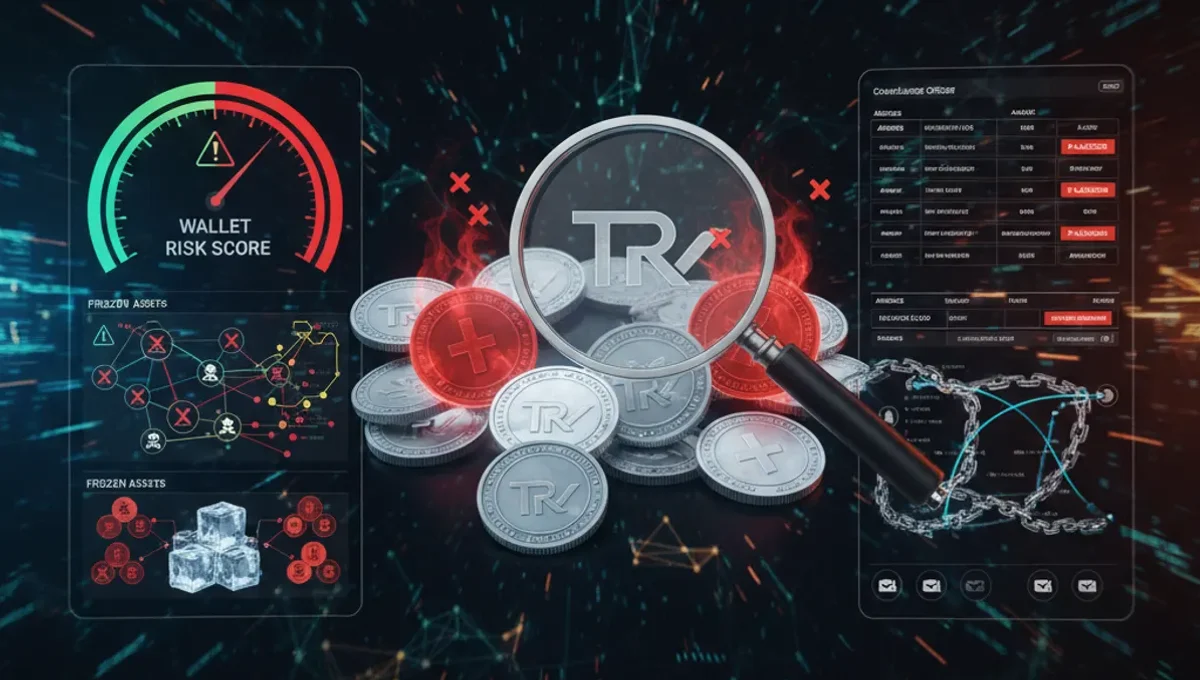
What Is the HackerRank Crypto Market Transactions Monitoring Problem?
The HackerRank crypto market transactions monitoring challenge asks developers to process and analyze transaction records to identify patterns, calculate metrics, and flag anomalies. The problem typically involves querying transaction data, grouping by wallet address or time period, and returning results that highlight high-volume activity, unusual patterns, or risk indicators. Solutions are written in SQL, Python, or Java, depending on the challenge variant. This mirrors real-world blockchain monitoring systems used by exchanges, custodians, and compliance teams to screen Tron (TRX), USDT TRC20, Bitcoin, and Ethereum addresses before accepting deposits or processing transfers. Understanding this problem builds foundational skills in transaction analysis, which is essential for detecting stolen funds, mixer usage, and sanctions violations.
SQL Approach: Querying Transaction Data for Risk Signals
The SQL solution to the crypto market transactions monitoring HackerRank problem typically involves JOIN operations, aggregate functions, and WHERE clauses to filter and analyze transaction records. A common approach groups transactions by wallet address, calculates total volume, transaction count, and time-based metrics, then ranks or filters results by risk thresholds. For example, a query might identify addresses with transaction volumes exceeding a threshold, multiple rapid transfers to different wallets (mixer-like behavior), or interactions with known darknet market addresses. The SQL solution demonstrates how blockchain analytics platforms screen wallets: they join transaction tables with risk lists (sanctions databases, stolen fund registries, mixer identifiers), aggregate activity metrics, and assign risk scores. This directly parallels AML transaction monitoring systems that flag USDT TRC20 transfers to high-risk addresses or detect patterns consistent with money laundering. Mastering SQL for transaction monitoring prepares developers for roles in compliance engineering and blockchain security.
GitHub Resources and Code Examples for the Solution
Multiple GitHub repositories host HackerRank crypto market transactions monitoring solutions in SQL, Python, and Java. These repositories typically include the problem statement, sample input/output, and complete working code with explanations. Searching for 'crypto market transactions monitoring hackerrank solution github' yields repositories where developers share their approaches, including edge cases and optimization techniques. Common patterns in these solutions include window functions for ranking transactions, CTEs (Common Table Expressions) for multi-step filtering, and subqueries to calculate risk metrics. When reviewing GitHub solutions, focus on how they handle wallet screening logic: do they cross-reference against blacklists, calculate velocity metrics (transaction frequency), or detect clustering patterns. These techniques directly apply to building internal AML checks for crypto wallets. Before integrating any external code, verify its correctness against the official HackerRank problem and test with sample data. For production AML systems, always use verified services listed on trusted compliance platforms rather than ad-hoc scripts.
MySQL Implementation: Building Transaction Monitoring Queries
The MySQL variant of the crypto market transactions monitoring HackerRank solution uses MySQL-specific syntax for window functions, date operations, and aggregation. A typical MySQL implementation creates a transactions table with columns for sender address, receiver address, amount, timestamp, and token type (TRX, USDT, BTC, ETH). Queries then use GROUP BY to aggregate by address, ORDER BY to rank by volume or frequency, and HAVING to filter by thresholds. For example, a query might identify addresses sending more than 100 transactions in a 24-hour period (velocity-based risk), or addresses receiving funds from multiple mixer-tagged wallets (source-of-funds risk). MySQL queries can also calculate time-decay metrics, where recent transactions weigh more heavily than older ones, reflecting how compliance teams assess current risk. The solution demonstrates how to structure blockchain data for efficient querying, which is foundational for building wallet screening systems. When implementing transaction monitoring in production, integrate with verified AML services on our curated list to ensure your risk scoring aligns with regulatory standards and sanctions list updates.
PDF Guides and Problem Walkthroughs
PDF guides for the crypto market transactions monitoring HackerRank solution are available through HackerRank's official platform, community forums, and educational repositories. These PDFs typically break down the problem into steps: understanding the data schema, writing the base query, adding filtering logic, optimizing for performance, and handling edge cases. A well-structured PDF guide explains the business logic behind each query component—why you group by address, why you calculate transaction count, and how these metrics map to real-world AML risk scoring. When reviewing PDF solutions, look for sections on interpreting results: what does a high transaction count mean (potential mixer or exchange activity), what does rapid address rotation indicate (possible money laundering), and how to set risk thresholds. These walkthroughs bridge the gap between coding exercises and compliance applications. For practitioners building AML systems, PDFs also often include comparison tables showing how different query approaches perform on large datasets, which is critical for screening millions of blockchain addresses efficiently.
Applying HackerRank Solutions to Real Blockchain Screening
The skills developed through the crypto market transactions monitoring HackerRank solution directly transfer to production AML and KYT systems. Real blockchain screening requires querying transaction histories, calculating risk metrics, and comparing results against sanctions lists, stolen fund registries, and darknet market databases. The HackerRank problem teaches the core logic: aggregate transaction data, identify anomalies, and flag high-risk activity. In practice, compliance teams use these techniques to screen Tron addresses before accepting USDT TRC20 deposits, check Bitcoin and Ethereum wallets for darknet exposure, and detect patterns consistent with scams or stolen funds. The solution also demonstrates how to handle performance at scale—blockchain networks process millions of transactions daily, so efficient queries are essential. When implementing wallet screening in your organization, start by understanding your risk tolerance and regulatory requirements, then use verified AML services from our curated list to ensure your screening meets compliance standards. These services integrate transaction monitoring, sanctions checking, and risk scoring into a single workflow, reducing the risk of frozen USDT or account bans due to incomplete screening.
Common Pitfalls and Optimization Techniques
Developers solving the crypto market transactions monitoring HackerRank problem often encounter pitfalls: incorrect grouping logic (missing transactions), inefficient joins (timeout on large datasets), and misinterpreted risk thresholds. Common optimization techniques include indexing on address and timestamp columns, using materialized views for frequently-run queries, and pre-calculating aggregate metrics during off-peak hours. Another pitfall is treating all transactions equally—in real AML systems, transaction size, direction (inbound vs. outbound), and counterparty risk all matter. A small transaction to a sanctioned address is higher risk than a large transaction to a known exchange. The HackerRank solution teaches basic aggregation, but production systems require weighted scoring. When building your own transaction monitoring, avoid hardcoding risk thresholds; instead, use configurable parameters that align with your compliance policy. For wallet screening before accepting deposits, always cross-reference results with current sanctions lists and stolen fund databases—these change frequently and require regular updates. Using verified AML services ensures your screening logic stays current with regulatory changes and emerging risk patterns.
Frequently asked questions
What programming languages are used for the crypto market transactions monitoring hackerrank solution?
The HackerRank crypto market transactions monitoring problem supports SQL, Python, and Java. SQL is most common for querying transaction data directly. Python solutions often use pandas for data manipulation and analysis. Java solutions demonstrate object-oriented approaches to transaction processing. Choose based on your platform's requirements and your team's expertise.
How do I optimize SQL queries for large blockchain transaction datasets?
Use indexes on address and timestamp columns, partition tables by date, and use window functions instead of self-joins. Pre-calculate aggregate metrics during off-peak hours and store results in materialized views. Avoid SELECT * and retrieve only needed columns. Test query performance on realistic data volumes before deploying to production.
Can I use the HackerRank solution directly for production AML screening?
The HackerRank solution teaches core transaction analysis logic but is not production-ready for compliance. Production AML systems require integration with current sanctions lists, stolen fund databases, and mixer identifiers. Use verified AML services from our curated list to ensure your screening meets regulatory standards and includes real-time risk updates.
What risk metrics should I calculate when monitoring crypto transactions?
Key metrics include transaction velocity (frequency per time period), transaction size distribution, address clustering (multiple rapid transfers to different addresses), time-of-day patterns, and counterparty risk (interactions with known high-risk addresses). Combine these into a weighted risk score that reflects your compliance policy and regulatory requirements.
How do I detect mixer usage or darknet exposure in transaction data?
Cross-reference wallet addresses against known mixer and darknet market lists maintained by blockchain analytics providers. Look for patterns like rapid address rotation, multiple small transactions consolidating into one large transfer, or interactions with flagged addresses. Use verified AML services to access current threat intelligence and ensure your detection logic stays current.