What Is KYT in Crypto and How Does It Differ from KYC
KYT (Know Your Transaction) and KYC (Know Your Customer) are complementary but distinct compliance tools. KYC verifies a user's identity, address, and source of funds once, typically when opening an exchange account. KYT, by contrast, monitors every transaction in real time, analyzing the movement of funds across the blockchain to flag suspicious activity. KYC is a one-time gate; KYT is continuous surveillance. A crypto billionaire meaning someone with substantial holdings, faces KYT scrutiny on every deposit or withdrawal. Exchanges use KYT to ensure incoming USDT, TRX, and BTC are not tainted by prior criminal activity, mixer involvement, or sanctions exposure. Without KYT, an exchange could unknowingly accept stolen coins or funds linked to darknet markets, triggering regulatory penalties and account freezes.
How KYT Crypto Meaning Relates to AML Risk Scoring
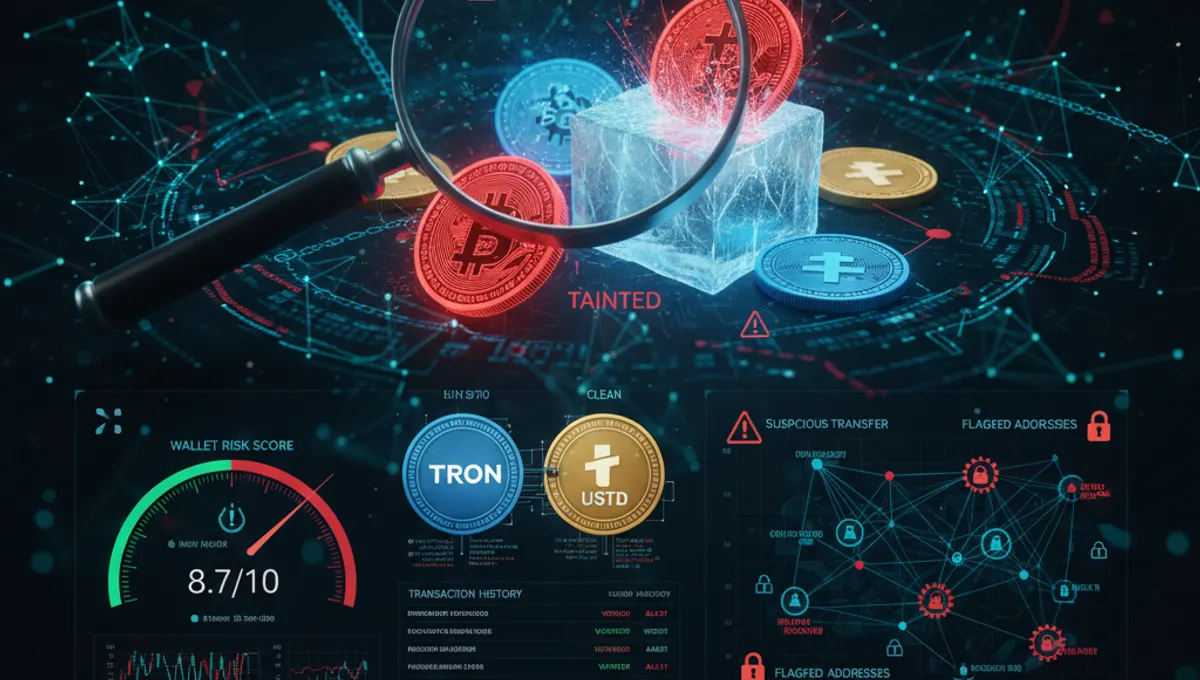
KYT crypto meaning extends into AML (Anti-Money Laundering) risk scoring, which assigns a numerical or categorical rating to each transaction based on its history. When you receive USDT or TRX, blockchain analytics firms trace the coin's path backward through the ledger, checking for red flags: Did it pass through a mixer. Was it ever held by a sanctioned entity. Did it originate from a darknet market or known scam. Did it appear in a theft report. Each flag increments the risk score. A low score (green) means the coin is clean; a high score (red) means it carries significant AML risk. Exchanges and custodians use these scores to decide whether to accept, hold, or freeze the transaction. A crypto transaction meaning the movement of value on-chain, is only as safe as its history. KYT systems reconstruct that history and quantify the danger.
What Risk Categories Does KYT Crypto Screening Detect
KYT screening identifies several categories of risk that trigger AML alerts. Mixer exposure occurs when coins pass through privacy-mixing services designed to obscure transaction trails. Darknet market links flag coins that have been held by known illegal marketplaces. Stolen funds are traced from reported theft incidents or exchange hacks. Sanctioned entity involvement means the coin was held by an individual or organization on a government sanctions list (OFAC, EU, UN). Gambling platform exposure may be flagged depending on jurisdiction and exchange policy. Scam proceeds include coins sent from known Ponzi schemes, rug pulls, or phishing attacks. Ransomware payments are coins received as extortion demands. Each category carries different regulatory weight; mixer exposure alone may not freeze an account, but sanctioned entity involvement almost certainly will.
How to Check a Wallet Address Before Receiving USDT or TRX
Before accepting crypto, verify the sender's wallet using a KYT-enabled AML check service. Step 1: Obtain the sender's wallet address (TRX, USDT TRC20, BTC, or ETH). Step 2: Visit a trusted AML screening platform from our curated list of verified AML services. Step 3: Paste the address into the search field and run the check. Step 4: Review the risk score and detailed report, which will show transaction history, mixer involvement, and any sanctions flags. Step 5: If the score is green or low-risk, proceed with the transaction. If the score is red or high-risk, ask the sender for clarification or decline. Most services return results in seconds. Some offer free limited checks; others charge per scan. For regular screening, checking wallets through the trusted services listed on our AML Services page ensures you have access to current blockchain data and professional-grade analysis.
What Do KYT Risk Score Levels Mean and When Should You Reject
Risk scores are typically presented as numerical ranges or color codes. Green (0–20% risk) indicates the address has a clean history with no known red flags; transactions are safe to accept. Yellow (21–50% risk) suggests minor concerns such as old mixer exposure or low-volume darknet contact; many exchanges accept these with caution. Orange (51–80% risk) signals moderate concern: recent mixer use, multiple suspicious transfers, or unresolved theft links; most exchanges require manual review. Red (81–100% risk) means high probability of illegal activity: active sanctioned entity involvement, recent darknet market transfers, or confirmed stolen funds; exchanges typically freeze or reject these outright. Acceptable thresholds vary by jurisdiction and business model. A retail exchange may reject anything above yellow; a high-risk trading desk may accept orange with documentation. If you receive coins flagged as red, do not deposit them to an exchange; they will be frozen, and your account may be suspended pending investigation.
What Happens When Exchange Detects Tainted Coins via KYT
When an exchange's KYT system flags incoming USDT, TRX, or BTC as high-risk, several outcomes are possible. Immediate freeze: the transaction is held pending manual review, and the account may be temporarily locked. Rejection: the deposit is returned to the sender's wallet. Account suspension: if the user has a history of receiving flagged coins, the exchange may close the account and freeze all balances. Regulatory reporting: the exchange files a Suspicious Activity Report (SAR) with financial authorities. In some cases, law enforcement may contact the account holder. Reputational damage: your wallet address becomes flagged in blockchain analytics databases, making future transactions harder. To avoid this, screen wallets before accepting transfers and maintain clean transaction history. If your coins are flagged, contact the exchange compliance team with documentation of the coin's origin; some exchanges will unfreeze after verification.
KYT Crypto Meaning in Compliance and Regulatory Context
KYT crypto meaning extends into regulatory obligation. Financial Action Task Force (FATF) guidance requires exchanges and custodians to monitor transactions for money laundering and terrorism financing. KYT systems are the technical backbone of this compliance. Regulators in the US, EU, and other jurisdictions expect exchanges to implement transaction screening as part of their AML program. Failure to do so results in fines, license revocation, and criminal liability for executives. For users, understanding KYT means recognizing that every transaction is potentially monitored. This is not surveillance in the traditional sense; it is automated risk assessment. Legitimate users with clean transaction history face no friction. Those receiving coins from high-risk sources will encounter delays, freezes, or rejections. The crypto transaction meaning has evolved from simple peer-to-peer value transfer to a compliance-monitored activity. KYT is the mechanism that enforces this shift.
Frequently asked questions
What does KYT stand for in crypto
KYT stands for Know Your Transaction. It is a compliance framework that monitors blockchain transactions in real time to detect money laundering risk, stolen funds, sanctions violations, and other AML red flags. KYT operates continuously on-chain, unlike KYC which verifies identity once at account opening.
How is KYT different from KYC in cryptocurrency
KYC (Know Your Customer) verifies a user's identity and source of funds at onboarding, a one-time process. KYT (Know Your Transaction) monitors every transaction after that, screening for risk in real time. Both are required by exchanges; KYC gates entry, KYT gates every transfer.
Can I check if a crypto address is safe using KYT
Yes. Use a KYT-enabled AML screening service to paste a wallet address and receive a risk score and detailed report. The report shows transaction history, mixer exposure, sanctions flags, and darknet links. Green scores indicate clean addresses; red scores signal high AML risk and potential account freezes.
What happens if I receive tainted coins flagged by KYT
If you deposit flagged coins to an exchange, they may be frozen pending review, rejected, or trigger account suspension. The exchange files a Suspicious Activity Report with regulators. To avoid this, screen wallet addresses before accepting transfers using trusted AML services.
Is KYT screening free or do I have to pay
Some AML services offer limited free checks per month; others charge per scan or require a subscription. For regular wallet screening, checking wallets through the trusted services listed on our AML Services page provides access to current blockchain data and professional analysis at transparent pricing.