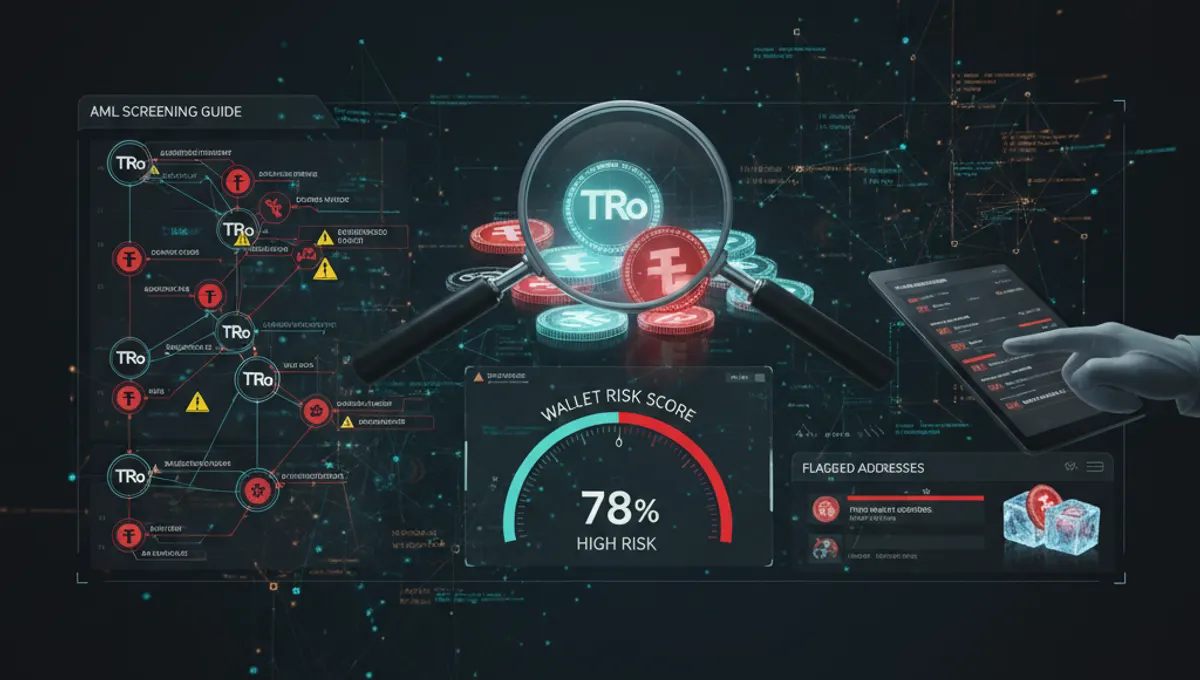
What Is a Tron Address and Why AML Checks Matter
A Tron address functions as a unique identifier for holding and transacting TRX tokens and TRC20 assets like USDT. Each address is derived from a private key and appears on the public ledger, making all transactions traceable. AML checks on Tron addresses screen for illicit activity: funds linked to mixers, ransomware, darknet markets, gambling platforms, or sanctioned entities can be flagged as high-risk. Exchanges and custodians monitor incoming deposits; if coins are flagged as tainted, your account may be frozen pending investigation, and you could lose access to your funds. Checking an address before transfer protects you from receiving dirty crypto and helps maintain compliance with financial regulations.
How to Check a Tron Address: Step-by-Step
To check a Tron address for AML risk:
- Obtain the full 34-character Tron address (starting with 'T') from the sender or recipient.
- Visit a blockchain explorer or AML screening service that supports Tron.
- Paste the address into the search field.
- Review the transaction history, balance, and any risk flags.
- Cross-reference the address against known risk categories: mixers, darknet exposure, stolen funds, sanctions lists.
- Check the risk score provided by the service (typically 0–100, where higher indicates greater risk).
- If the score is above your acceptable threshold, investigate further or decline the transaction.
For a comprehensive AML check, use verified services listed on our curated AML Services page—they integrate blockchain analytics and sanctions databases to provide accurate risk scoring on Tron addresses.
Understanding Tron Address Risk Scores and Categories
Risk scores quantify the likelihood that a Tron address is associated with illicit activity. Most services use a 0–100 scale:
- 0–20: Low risk. Address shows minimal or no connection to known illicit sources.
- 21–50: Medium risk. Address may have received funds from mixers or unverified sources; investigate further.
- 51–80: High risk. Address is linked to darknet markets, gambling, or other suspicious activity.
- 81–100: Critical risk. Address is flagged for stolen funds, ransomware, or sanctioned entities.
Risk categories include mixer exposure (funds passed through privacy tools), darknet linkage (transactions to known dark web markets), stolen funds (traced to theft or fraud), gambling (deposits from gaming platforms), and sanctions (addresses tied to OFAC-listed entities). Your acceptable threshold depends on your compliance requirements; most institutional buyers reject anything above 50.
What to Do If a Tron Address Is Flagged as High-Risk
If a Tron address check returns a high-risk score, take these steps:
- Do not proceed with the transaction unless you can verify the source independently.
- Contact the sender and ask for clarification about the address origin and transaction history.
- Request an alternative address if available.
- If you must proceed, document your due diligence in case regulators or your exchange inquire later.
- Notify your exchange or custodian before depositing; some platforms will freeze flagged deposits automatically.
- If you receive tainted coins, report the transaction to your exchange's compliance team immediately.
Exchanges may freeze accounts holding flagged USDT or TRX pending investigation. Recovery can take weeks or months. Proactive checking prevents this scenario entirely.
Tron Address Checker Tools and Services
Several tools allow you to check Tron addresses:
- Blockchain explorers (e.g., Tronscan) show transaction history and balances but do not provide AML scoring.
- Dedicated AML screening services integrate blockchain data with sanctions lists, theft databases, and mixer detection to produce risk scores.
- Some services offer free basic checks with limited history; premium tiers provide deeper analytics and API access.
For reliable, verified AML checks on Tron addresses, review our curated list of AML Services—these providers have been vetted for accuracy, compliance integration, and coverage of TRC20 tokens. Using a trusted service ensures your risk assessment is based on current data and recognized threat intelligence.
How Exchanges Freeze USDT and TRX from Flagged Addresses
When you deposit USDT or TRX from a high-risk Tron address, exchanges run automated AML screening. If the address matches a sanctions list, mixer, or theft database, the exchange flags the deposit. The account may be frozen immediately, and the exchange's compliance team will investigate. During this period, you cannot withdraw or trade. If the exchange determines the coins are tainted, they may be seized or returned to the sender. Even if you are not personally responsible for the illicit activity, holding flagged coins creates liability. Checking the Tron address before transfer is the simplest way to avoid this outcome.
Best Practices for Screening Tron Addresses Before Transfer
Adopt these practices to minimize risk:
- Always check a new Tron address before sending or receiving significant amounts of TRX or USDT.
- Use an AML service that covers Tron and TRC20 tokens; not all blockchain analytics platforms support all chains equally.
- Set an acceptable risk threshold for your use case (e.g., reject anything above 30 for institutional transfers, 50 for personal use).
- Keep records of your checks for compliance audits.
- If you receive unsolicited transfers from unknown addresses, check them immediately before moving the funds.
- For large transactions, perform multiple checks using different services to cross-verify the risk score.
- Request Tron addresses from trusted, verified sources whenever possible.
Our AML Services page lists verified providers that specialize in Tron screening and can integrate into your workflow.
Frequently asked questions
How do I check if a Tron address is safe before sending USDT?
Use an AML screening service that supports Tron. Paste the 34-character address (starting with 'T') into the checker, review the risk score, and verify the transaction history. Check for flags related to mixers, darknet exposure, or stolen funds. If the score is above your threshold, do not send. Our AML Services page lists verified providers for Tron address checks.
What does a high AML risk score on a Tron address mean?
A high risk score (typically 51–100) indicates the address is linked to illicit activity: mixers, darknet markets, stolen funds, ransomware, or sanctioned entities. Receiving USDT or TRX from such an address may trigger exchange account freezes or asset seizure. Always investigate before accepting transfers from high-risk addresses.
Can my exchange freeze my account if I receive USDT from a flagged Tron address?
Yes. Exchanges run automated AML screening on deposits. If USDT or TRX arrives from a high-risk address, your account may be frozen pending investigation. Recovery can take weeks. Checking the Tron address before transfer prevents this. Use a trusted AML service to screen addresses in advance.
What is the difference between a Tron address and a Bitcoin address?
A Tron address is a 34-character string starting with 'T' and operates on the Tron blockchain; a Bitcoin address is typically 26–35 characters starting with '1', '3', or 'bc1' and operates on the Bitcoin blockchain. They are not interchangeable. AML checks must be performed on the correct blockchain for accurate risk assessment.
How often should I check a Tron address for AML risk?
Check any new or unfamiliar Tron address before sending or receiving funds. For ongoing relationships, periodic re-checks (monthly or quarterly) can catch new risk flags. If you receive an unexpected transfer, check the address immediately. For institutional compliance, integrate continuous monitoring through an AML service.