What Are Cryptocurrency AML Red Flags?
Cryptocurrency AML red flags are indicators that a transaction or wallet may be involved in money laundering, sanctions evasion, or other illicit activity. These flags emerge from transaction patterns, wallet behavior, and historical associations rather than a single transaction. Common red flags include rapid fund movement between multiple wallets, deposits from known darknet markets, mixing service usage, and transactions involving sanctioned jurisdictions or entities. A red flag in AML context doesn't prove guilt but signals elevated risk requiring further investigation. Exchanges and compliance teams use these signals to trigger transaction monitoring and decide whether to freeze funds or block accounts. For individual users, recognizing red flags protects you from inadvertently receiving tainted coins that could lock your account or expose you to legal liability.
How Does Cryptocurrency Transaction Monitoring Detect Red Flags?
Cryptocurrency transaction monitoring works by analyzing on-chain data—wallet addresses, transaction amounts, timing, and destination patterns—against known risk databases. Blockchain analytics tools track fund flows and flag transactions that match high-risk profiles. Key detection methods include: clustering addresses to identify wallet ownership patterns, comparing transaction destinations against sanctions lists and darknet market databases, measuring transaction velocity (how quickly funds move between addresses), and identifying mixer or tumbler usage. When a transaction meets multiple risk criteria, it receives a higher AML risk score. Exchanges and custodians run incoming deposits through these monitoring systems automatically. A single transaction from a mixer to your wallet, for example, may not trigger a freeze, but combined with other factors—rapid onward movement, small amounts to many addresses, or timing aligned with known scam activity—it can escalate to account restriction. Understanding how transaction monitoring works helps you anticipate why a legitimate transaction might be flagged.
Common Cryptocurrency Money Laundering Red Flags to Watch
Specific patterns consistently indicate money laundering risk in crypto transactions. Mixer and tumbler usage is a primary red flag—funds sent through services designed to obscure transaction history raise immediate compliance concerns. Rapid address hopping, where funds move through many wallets in quick succession, suggests an attempt to break the transaction trail. Deposits from known darknet market addresses, even if the amount is small, carry high risk. Sanctioned jurisdiction involvement—sending or receiving from addresses linked to countries or entities on OFAC lists—triggers automatic freezes at most exchanges. Unusual transaction timing, such as large transfers at irregular hours or during market volatility, can signal coordinated movement. Structuring, or breaking large amounts into many small transactions to avoid detection thresholds, is a classic money laundering technique. Receiving funds from scam or theft addresses identified in public databases also flags your wallet. Gambling platform deposits followed by rapid withdrawal to new addresses suggest layering activity. Any combination of these patterns significantly increases your AML risk score and likelihood of account restrictions.
What Is a Red Flag in AML and How Are Risk Scores Calculated?
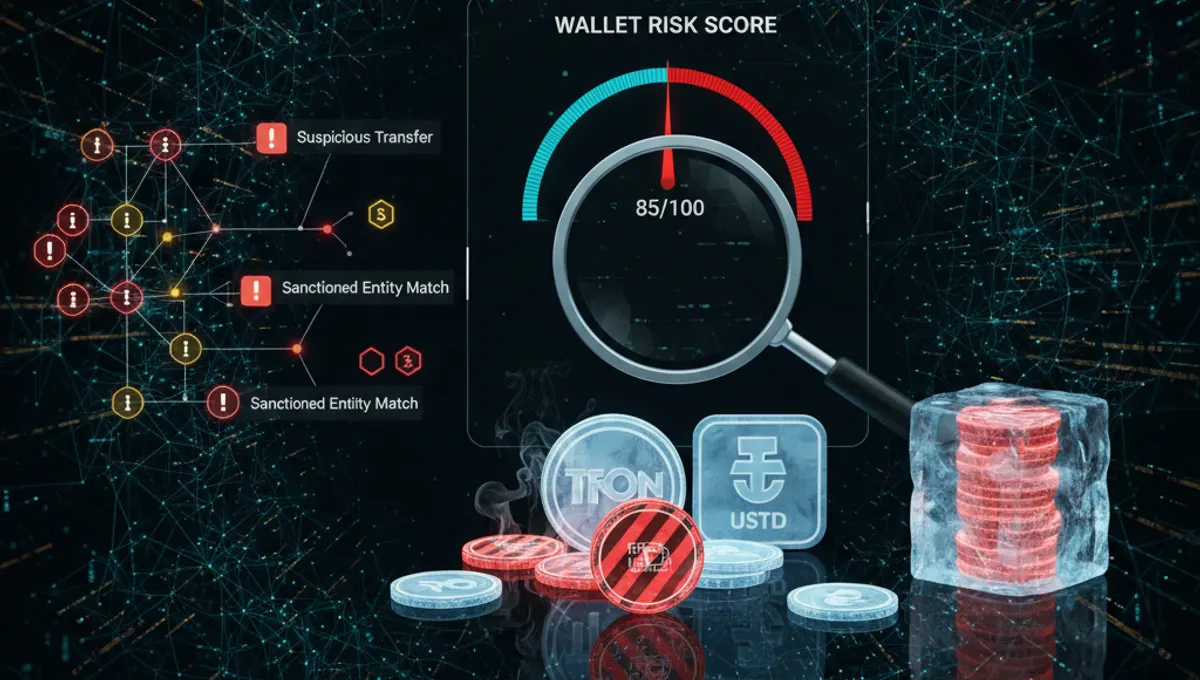
A red flag in AML is any transaction attribute or wallet behavior that deviates from normal, legitimate use and suggests potential illicit activity. Risk scores quantify this deviation on a scale, typically 0–100 or low-medium-high, based on weighted factors. Factors include: source address reputation (is it associated with known theft, sanctions, or darknet activity?), transaction pattern (velocity, frequency, destination diversity), mixing service involvement, geographic risk (jurisdiction of counterparty), and transaction size relative to wallet history. Blockchain analytics platforms assign points for each factor; a wallet receiving from a mixer might score +20 points, while a sanctioned address adds +50. Most exchanges consider scores above 50–70 as elevated risk, triggering manual review or transaction denial. Scores above 80 typically result in account freeze or closure. The calculation is proprietary to each service, but the principle is consistent: more red flags and higher-risk associations increase the score. Understanding your wallet's risk score before sending funds to an exchange helps you anticipate compliance friction.
How to Check a Wallet for Red Flags Before Receiving Crypto
Before accepting a cryptocurrency transfer, especially large amounts, screen the sending address for red flags. Step-by-step process: First, obtain the sender's wallet address and note the asset type (USDT TRC20, Bitcoin, Ethereum, etc.). Second, use a blockchain explorer to view the address's transaction history—look for rapid fund movement, multiple small outgoing transfers, or recent deposits from mixers. Third, cross-reference the address against public theft and scam databases to check for known compromised wallets. Fourth, use an AML screening service to generate a risk score and detailed report showing source of funds and associated risks. Most reputable services provide a risk rating and flag specific concerns. Fifth, review the report for red flags: mixer usage, sanctioned entity involvement, darknet market associations, or stolen fund warnings. If the risk score exceeds your acceptable threshold (typically 30–50 for most users), decline the transfer or request clarification from the sender. For USDT TRC20 and Tron addresses specifically, the same screening applies—use services that support TRC20 token analysis. Our curated list of verified AML services on this site includes tools that handle multiple blockchain standards and provide transparent risk scoring.
What Happens When Your Wallet Is Flagged as High-Risk?
When a wallet receives a high AML risk score or is flagged for money laundering indicators, several consequences follow. Exchanges typically freeze the account pending manual review, preventing deposits, withdrawals, and trading for days or weeks. During review, compliance teams examine transaction history, request proof of funds origin, and may ask for identity verification or additional documentation. If the review confirms illicit association—such as confirmed theft or sanctions violation—the account is permanently closed and funds may be seized. Even if cleared, the wallet remains flagged in blockchain analytics databases, making future transactions slower and more scrutinized. Receiving frozen USDT or other assets means you cannot move or trade them until the freeze is lifted. In some cases, exchanges refuse to unfreeze accounts if the risk is deemed too high. Preventive measures include: only receiving from known, trusted sources; avoiding addresses with mixer involvement; checking sender wallets before accepting transfers; and maintaining clean transaction history. If your wallet is flagged, contact the exchange's compliance team immediately with documentation of legitimate fund sources. Transparency and cooperation typically lead to faster resolution than silence.
Acceptable Risk Score Thresholds and Best Practices
Risk score thresholds vary by exchange and jurisdiction, but general guidelines help you assess acceptability. Scores 0–20 are considered low risk and rarely trigger issues. Scores 20–50 are moderate risk; exchanges may flag for review but typically allow transactions with documentation. Scores 50–70 are elevated risk; expect transaction delays, account review, or denial depending on the exchange's policy. Scores above 70 are high risk and frequently result in account freeze or closure. For personal use, aim to keep your wallet's risk score below 30 by: only receiving from reputable exchanges or known individuals, avoiding mixer services, never transacting with sanctioned addresses, and maintaining consistent transaction patterns. For business or high-volume trading, scores below 50 are generally acceptable with proper documentation. Best practices include: screening all incoming transfers before acceptance, maintaining detailed records of fund sources, using compliant exchanges for deposits and withdrawals, and avoiding rapid address hopping. If you receive an unexpected transfer from an unknown source, do not move it immediately—screen it first. Crypto vs real money differs in transparency; blockchain transactions are permanent and traceable, so due diligence upfront prevents costly freezes later. Use the verified AML services listed on our site to establish baseline risk profiles for wallets you interact with regularly.
Frequently asked questions
What are the main red flags for cryptocurrency money laundering?
Main red flags include mixer or tumbler usage, rapid address hopping, deposits from darknet markets, sanctioned jurisdiction involvement, unusual transaction timing, structuring (breaking large amounts into small transfers), and gambling platform deposits followed by rapid withdrawals. Any combination of these patterns increases AML risk significantly and may trigger account freezes.
How do I check if a crypto wallet has red flags before receiving funds?
Use a blockchain explorer to view the wallet's transaction history, then cross-reference it against theft databases and run it through an AML screening service. Look for mixer usage, rapid fund movement, sanctioned addresses, or darknet associations. Most services provide a risk score and detailed report. If the score exceeds your threshold, decline the transfer or request clarification from the sender.
What happens if I receive cryptocurrency flagged as high-risk?
Exchanges typically freeze your account pending compliance review. If the funds are confirmed as stolen or sanctioned, your account may be permanently closed and funds seized. Even if cleared, your wallet remains flagged in analytics databases, causing slower future transactions. Prevent this by screening all incoming transfers and only receiving from trusted sources.
What is an acceptable AML risk score for cryptocurrency transactions?
Scores 0–20 are low risk and rarely problematic. Scores 20–50 are moderate and may trigger review but usually allow transactions with documentation. Scores above 50 are elevated risk and frequently result in delays or denial. For personal use, aim below 30. For business, below 50 is generally acceptable with proper records and compliance documentation.
Can I recover cryptocurrency that was flagged as stolen or tainted?
Recovery depends on the specific circumstances and jurisdiction. If you received stolen funds unknowingly, most exchanges will freeze them pending investigation. Providing proof of good faith and legitimate receipt may help, but exchanges typically cannot release confirmed stolen assets. Prevention through pre-transaction screening is far more effective than attempting recovery after the fact.