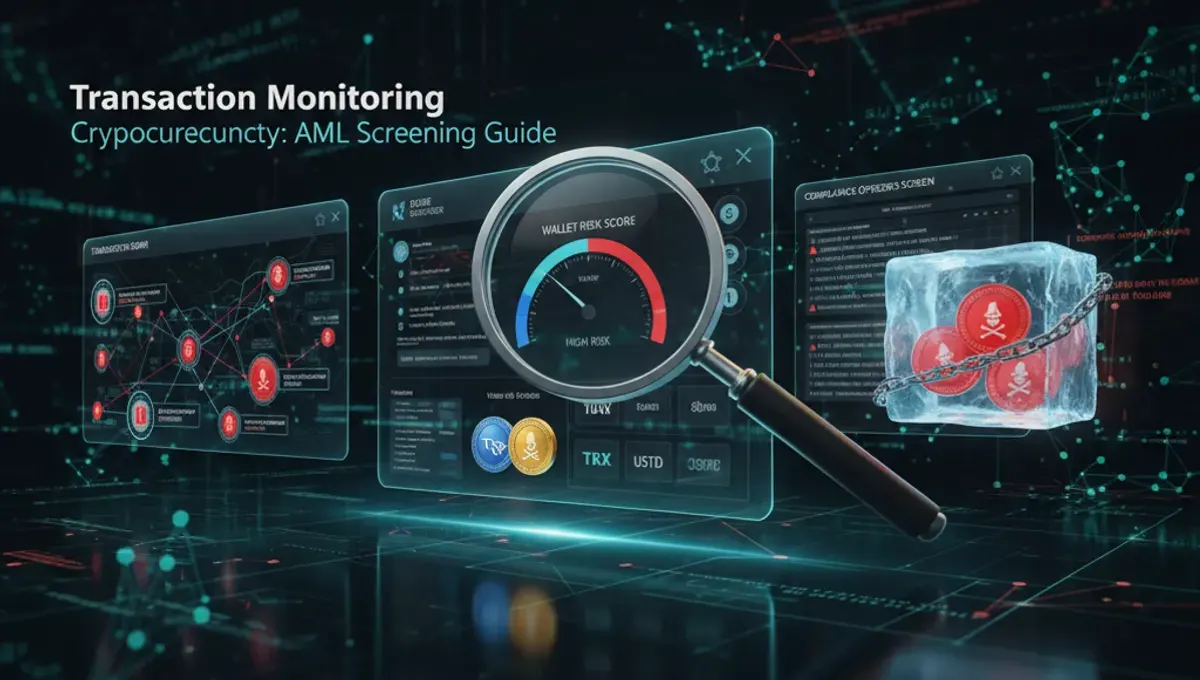
What Is Transaction Monitoring in Cryptocurrency?
Transaction monitoring cryptocurrency refers to the automated and manual review of blockchain transfers to flag high-risk activity. Unlike traditional banking, where transactions pass through centralized intermediaries, blockchain transactions are immutable and publicly visible—making them both transparent and traceable. Crypto transaction monitoring examines wallet addresses, transaction history, and fund sources to assign a risk score. This process identifies whether coins have been mixed, used on darknet markets, stolen, or linked to sanctioned entities. Exchanges and custodians perform blockchain transaction monitoring to comply with anti-money laundering (AML) regulations and know-your-transaction (KYT) requirements. When you deposit cryptocurrency, the exchange screens your wallet address and incoming funds against risk databases. If your coins are flagged as high-risk, your deposit may be rejected or your account frozen until you prove the funds are legitimate.
How Does AML Transaction Monitoring Work?
AML transaction monitoring rules operate on a multi-layer screening system. First, the system checks the wallet address against sanctions lists (OFAC, UN, EU) to ensure no funds come from blacklisted entities. Second, it traces the transaction history backward to identify the source of funds—whether they originated from a known mixer, darknet marketplace, or legitimate exchange. Third, it assigns a risk score based on behavioral patterns: rapid transfers between wallets, round-number amounts, and clustering with other suspicious addresses all increase the score. Fourth, it flags transactions that match known scam or theft patterns. The system uses heuristics and machine learning to detect mixing services, which obscure transaction trails. AML transaction monitoring rules vary by jurisdiction and exchange, but most follow Financial Action Task Force (FATF) guidelines. Risk scores typically range from 0 (clean) to 100 (high-risk). A score above 50 often triggers manual review or rejection. Exchanges may also apply transaction monitoring cryptocurrency rules retroactively—if a wallet is later linked to theft or sanctions, previously accepted deposits can trigger account freezes.
How to Check a Cryptocurrency Address Before Receiving Funds
Before accepting a transfer of USDT, TRX, BTC, or ETH, screen the sending wallet to avoid receiving tainted coins. Follow these steps:
- Obtain the sender's wallet address and note the blockchain (Tron, Ethereum, Bitcoin).
- Visit a blockchain transaction monitoring service and enter the address.
- Review the risk score and transaction history.
- Check for red flags: mixer usage, darknet exposure, stolen-funds reports, or sanctions hits.
- If the score is below 30 and no major red flags appear, the transfer is likely safe.
- If the score is 50 or above, ask the sender for proof of funds origin or decline the transfer.
For TRC20 tokens (USDT on Tron), check both the token contract address and the sending wallet. For Bitcoin and Ethereum, examine the full transaction chain, as these blockchains have longer histories. Many exchanges now require this screening automatically, but doing it yourself before deposit adds a safety layer. If you receive flagged coins, your exchange account may be frozen pending investigation, even if you were unaware of the risk. Proactive screening prevents this.
Understanding Cryptocurrency Risk Scores and What They Mean
A crypto transaction monitoring risk score quantifies the likelihood that a wallet or transaction is associated with illicit activity. Scores are typically on a 0–100 scale:
- 0–20: Clean. Funds originate from known legitimate sources (major exchanges, verified businesses).
- 21–40: Low risk. Minor red flags or limited transaction history, but no clear illicit links.
- 41–60: Medium risk. Possible mixer usage, unverified sources, or clustering with suspicious wallets.
- 61–80: High risk. Strong indicators of mixing, darknet exposure, or sanctions-list proximity.
- 81–100: Critical. Direct links to theft, sanctions, or active darknet markets.
Exchanges set their own thresholds. Most reject deposits with scores above 60. Some custodians accept up to 50 if the user passes KYC verification. Risk scores are not permanent—they reflect the wallet's current transaction history. If a wallet was used for illicit activity years ago but has been dormant or used only for legitimate transfers since, the score may decrease over time. However, historical taint can persist. A wallet that received stolen Bitcoin in 2019 may still carry elevated risk in 2024, even if recent activity is clean.
Common Risk Categories in Blockchain Transaction Monitoring
Blockchain transaction monitoring flags wallets based on several risk categories:
- Mixers and tumblers: Services that obscure transaction trails by combining and splitting funds. Mixer usage is a major red flag because it indicates intent to hide transaction history.
- Darknet markets: Wallets linked to known illegal marketplaces. Transactions to or from these addresses are automatically flagged.
- Stolen funds: Cryptocurrency traced to theft, hacking, or fraud. Blockchain analytics firms maintain databases of known theft addresses.
- Sanctions: Wallets linked to individuals or entities on OFAC, UN, or EU sanctions lists. Receiving from sanctioned addresses can trigger regulatory penalties.
- Gambling and high-risk services: Some exchanges flag wallets with frequent transfers to gambling platforms, though this is lower-risk than other categories.
- Scams and Ponzi schemes: Wallets associated with known scam projects or fraudulent schemes.
- Ransomware: Cryptocurrency paid to ransomware operators. These addresses are tracked and flagged.
Not all flagged activity is illegal—some legitimate users interact with mixers for privacy reasons—but exchanges apply strict rules to avoid regulatory liability.
What Happens If Your Wallet Is Flagged as High-Risk?
If your wallet receives a high risk score during cryptocurrency transaction monitoring, several outcomes are possible:
- Deposit rejection: The exchange refuses the incoming transfer and returns it to the sender.
- Account freeze: Your account is locked pending manual review. You cannot withdraw or trade.
- Funds seizure: In rare cases, if the funds are linked to theft or sanctions, the exchange may hold them indefinitely or report them to authorities.
- KYC escalation: You are asked to provide proof of funds origin—receipts, invoices, or bank statements showing where the money came from.
- Account closure: If you cannot explain the source or if the risk is deemed unacceptable, your account is permanently closed.
To resolve a flagged wallet, contact the exchange's compliance team with documentation. Provide the sender's identity, the reason for the transfer, and proof that the funds are legitimate. If the coins were received unknowingly (e.g., a payment from a client who later turned out to be using stolen funds), explain this and provide evidence of the transaction context. Some exchanges will clear the hold if you can demonstrate good faith. However, if the coins are directly linked to theft or sanctions, no amount of documentation will unfreeze them. This is why screening before deposit is critical.
Best Practices for Crypto Transaction Monitoring and Compliance
To minimize risk and maintain clean accounts:
- Screen wallets before sending or receiving large amounts. Use verified AML services listed on trusted compliance platforms.
- Avoid mixing services and tumblers. Even if used for privacy, they trigger high-risk flags and may result in account freezes.
- Keep transaction records. Document the business purpose of each transfer, especially for work-related payments.
- Use regulated exchanges for deposits and withdrawals. Peer-to-peer transfers carry higher risk because counterparties are unverified.
- Monitor your wallet's transaction history. If your address is used in a transaction chain that later becomes flagged, your account may be affected retroactively.
- Verify sender identity before accepting transfers. Ask for wallet addresses in advance and confirm they match.
- Report suspicious activity. If you receive unsolicited transfers from unknown sources, report them to your exchange immediately.
- Stay informed on regulatory changes. AML transaction monitoring rules evolve; compliance standards vary by jurisdiction.
For businesses and professionals handling crypto payments, consider using dedicated KYT (Know Your Transaction) tools and consulting the curated list of verified AML services available on this site to ensure your transaction monitoring cryptocurrency practices meet current standards.
Frequently asked questions
What is the difference between transaction monitoring and wallet screening?
Transaction monitoring tracks ongoing activity across a wallet's history to detect patterns and flag suspicious behavior. Wallet screening is a point-in-time check of a single address to assess its current risk. Both are used together: screening before deposit, and monitoring after to catch retroactive risk.
Can I remove a high risk score from my cryptocurrency wallet?
Risk scores are based on historical transaction data and cannot be manually removed. However, scores may decrease over time if the wallet is used only for legitimate transfers and remains dormant from flagged activity. Providing documentation of funds origin to your exchange may help resolve account freezes, but the underlying score reflects blockchain history.
Are all cryptocurrency transactions traceable?
Yes, all blockchain transactions are traceable on the public ledger. However, mixing services and privacy coins obscure the trail. Bitcoin, Ethereum, and Tron transactions are permanently recorded and can be analyzed to identify fund sources and destinations, even if the wallet owner is anonymous.
What risk score is acceptable for receiving cryptocurrency?
Most exchanges accept deposits with risk scores below 40–50, depending on their compliance policy. Scores above 60 typically trigger rejection or account freeze. However, thresholds vary by exchange and jurisdiction. Always check your exchange's specific AML rules before accepting transfers.
How do I know if cryptocurrency I received is stolen?
Check the wallet address and transaction history using a blockchain analytics tool. If the coins are linked to a known theft report or ransomware payment, they are flagged as stolen. Your exchange will likely freeze the deposit. Contact the exchange's compliance team with documentation of how you received the funds to resolve the issue.